Autistic children endure a lot of ‘behaviour analysis,’ usually done by non-autistic people who are not trained to interpret autistic behaviour and motivation.
THINKING PERSON'S GUIDE TO AUTISM
Autism news and resources: from autistic people, professionals, and parents
Autistic children endure a lot of ‘behaviour analysis,’ usually done by non-autistic people who are not trained to interpret autistic behaviour and motivation.

Cos Michael www.autismage.com Cos Michael | photo courtesy author [image: Photo of a white British woman with short-ish curly platinum hair.] ABA (Applied Behavioural Analysis) as a discipline, requires autistic children to appear as if they are typical children. It doesn’t matter how kind and well meaning the teacher, whether they are autistic or not, a loving parent or not—the outcome is that the “successful” autistic child ceases the behaviour that defines them as autistic. They never stop being autistic. Once you realise that an autistic child will never stop being autistic, it becomes clear that they are suppressing their natural responses. It is masking, or “camouflaging.” Asking a child to mask all of the time causes a build up of stress. Stress is both mentally and physically damaging. When that child grows up, they are likely to exhibit the mental and physical effects of their stress. Autistic people are…

I’m angry about the sudden popularity of fidget spinners, but probably not for the reasons you think. I’m not mad that they’re disruptive in class, or obnoxiously trendy. I’m furious because of what they reveal about societal power structures, and the pathologizing of disabled people by non-disabled persons.
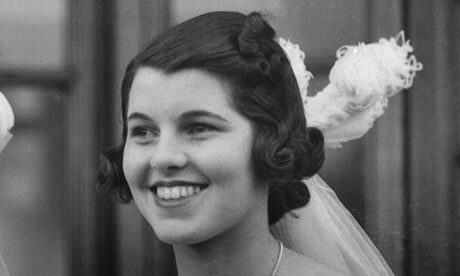
Today would have been Rosemary Kennedy’s 98th birthday. In her honor, we are are featuring autistic writer Kate Ryan‘s review of the book Rosemary: The Hidden Kennedy Daughter, by Kate Clifford Larson. —- Rosemary Kennedy [image: Black-and-white photo of a smiling white young woman with dark 1940s-style coiffed hair.] Growing up in the Boston area, I knew about the Kennedys. It seemed to me, as a child and an adult, that everyone knows about the Kennedys, and their big, boisterous Catholic family that would leave such an impact on Massachusetts and the world. About their political aspirations and horrific assassinations, about their charitable foundations, about their triumphs and tragedies. About Jack and Teddy and Eunice and Rose. Until recently, however, I have known very little about what is perhaps one of the saddest tragedies to come out of the Kennedy family: that of Rosemary Kennedy. A new biography by Kate…
[image: Book cover, with the title, “Switched On: A Memoir of Brain Change and Emotional Awakening”] The new book Switched On is author John Elder Robison’s deeply personal account of seismic shifts in his emotional, social, and perceptual responses to other people, the world, and his own memories — due to participating in brain research on Transcranial Magnetic Stimulation (TMS) and autism. I spoke with Mr. Robison about his hopes in choosing this journey, its costs in terms of his own health and happiness, his autism advocacy, and the risk of frantic parents assuming his story means they need to use TMS on their autistic kids. Thinking Person’s Guide to Autism: Are you concerned that people might see Switched On as an argument for “normalization” treatments for autistic people? Even though you are careful to emphasize that “we cannot know the future, or the potential, of anyone,” even though you…